The Nordic countries' first digital and interactive safety plan for Safetum
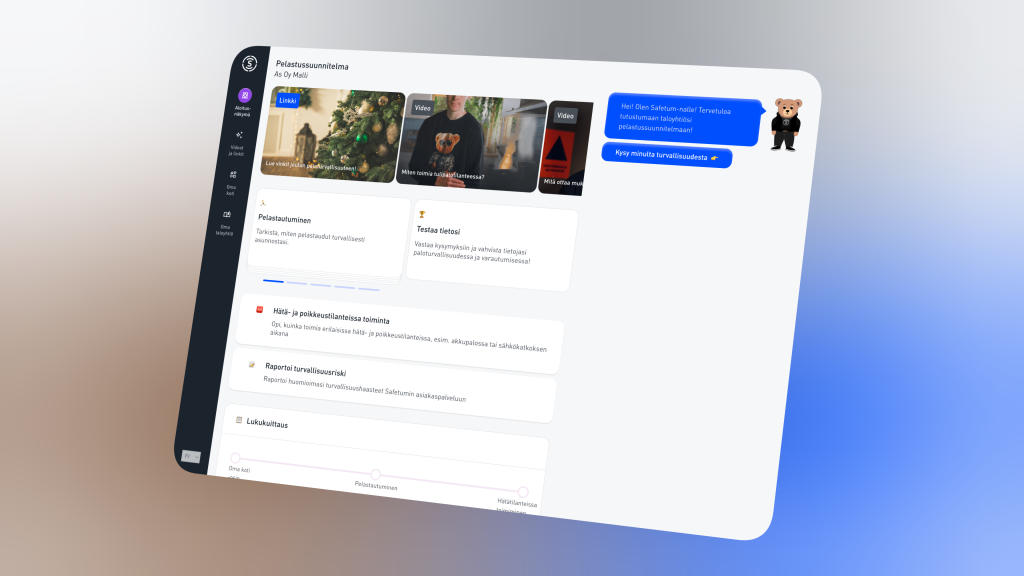
Together with Safetum, we set out to reinvent the concept of mandatory safety plans for housing companies. Our goal was to create a competitive advantage through a distinctive, mobile-first digital service that leverages AI to make safety information approachable and genuinely useful.
A traditional safety plan is often a multipage PDF, perceived merely as a legal obligation that no one actually reads. Safetum recognized a massive opportunity here to improve the user experience and create a service that provides genuine added value for the end user – the resident.
The Challenge: How to transform a bureaucratic document into an engaging experience?
Safetum’s digital transformation had already begun with a risk and management tool designed for property managers, but the next step was to shift the focus toward the most important target group: the residents.
The challenge was clear. Throughout the industry, safety plans were rigid, regardless of the provider. Based on customer feedback, the existing model’s reputation was anything but user-friendly.
“We had received a lot of feedback from customers that the safety plan is perceived as a heavy and ‘dry’ document, existing only due to legal necessity. In practice, no resident actually reads it or explores its content; instead, it gets buried in a digital folder,” describes Safetum’s CDO Martti Soininen.
The objective was twofold: to improve the resident experience while building a clear competitive advantage. In the market, virtually all providers were offering the same static document.
“We wanted to stand out strongly in the market and build a competitive advantage through that differentiation. Our vision was to thoroughly modernize the existing safety plan and completely rethink the entire concept.”
Martti Soininen, Chief Digital Officer, Safetum
Solving the challenge with resident insight and a new vision at the core
From the very beginning, residents were placed at the heart of the solution. The process kicked off with interviews facilitated by Hion, involving a diverse group of users: board members of housing companies, safety-oriented individuals, and everyday residents.
The interviews confirmed a need for two key things: residents wanted concrete, situational instructions and the assurance that up-to-date information is easily accessible.
The cornerstones of the new concept became ease of use and breaking information down into smaller, digestible pieces to avoid information overload. While inspiration was partly drawn from learning apps like Duolingo, the goal was to ensure the service remained, above all, a reliable and credible source of information.
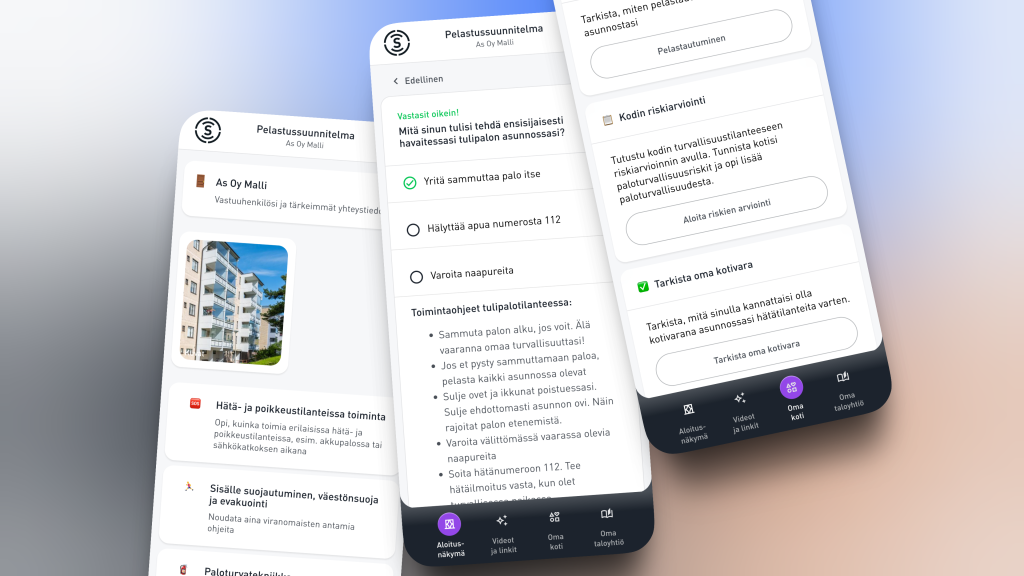
The conceptualization process utilized data, expert insights, and the needs and development suggestions identified during the interviews. Throughout this phase, we evaluated the new product’s content hierarchy, functionalities, and future-proof perspective—ensuring the service is as adaptable, sustainable, and engaging as possible, encouraging residents to explore emergency preparedness and fire safety.
We designed a completely new kind of concept and service, the likes of which have never been seen before in the Nordics.
“I challenged the team at every turn, emphasizing that the final result must not be too similar to what existed before. The bar had to be set high enough to ensure we created a service that looks and feels genuinely new and different.”
Martti Soininen, Chief Digital Officer, Safetum
Once the visual prototype was completed, we moved on to the technical implementation. A key factor in the project’s success was the close and proactive collaboration between the Safetum and Hion teams.
“The collaboration throughout the project worked exceptionally well. Communication was fast and fluid, and matters were handled proactively. We received constructive suggestions on different implementation methods and solved problems together.”
Martti Soininen, Chief Digital Officer, Safetum
Approachable safety awareness: Safetum’s AI Teddy
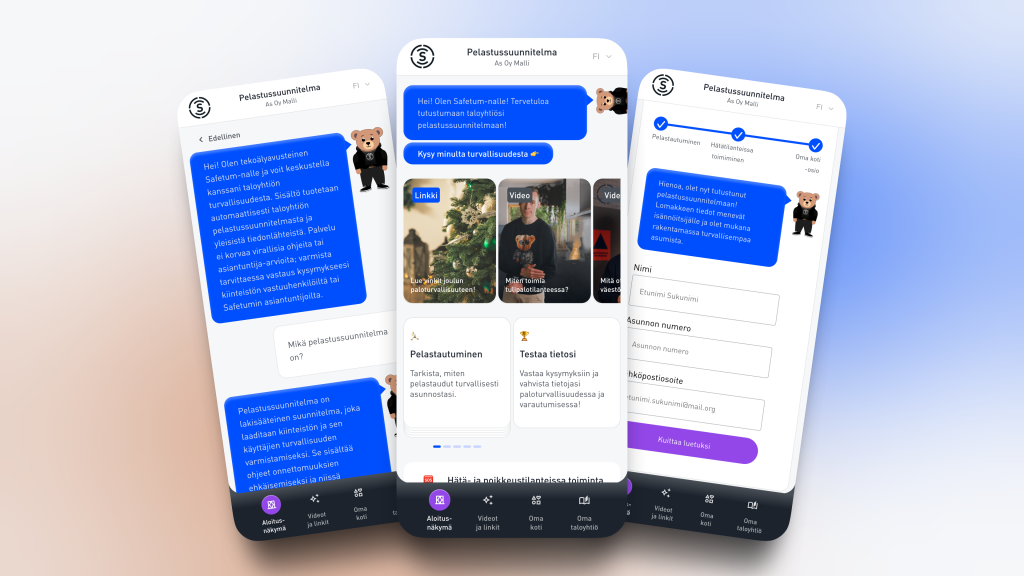
One of the most significant innovations in the service is the AI Teddy, developed by Safetum and Hion. It transforms complex safety matters into clear answers: the resident asks, the teddy answers.
AI Teddy turns artificial intelligence into a concrete safety benefit for residents. It lowers the threshold for exploring the rescue plan and provides easy-to-use, multilingual, and accessible support. It is designed especially to help those who engage with instructions less frequently to find the correct courses of action in emergency situations and everyday risk scenarios.
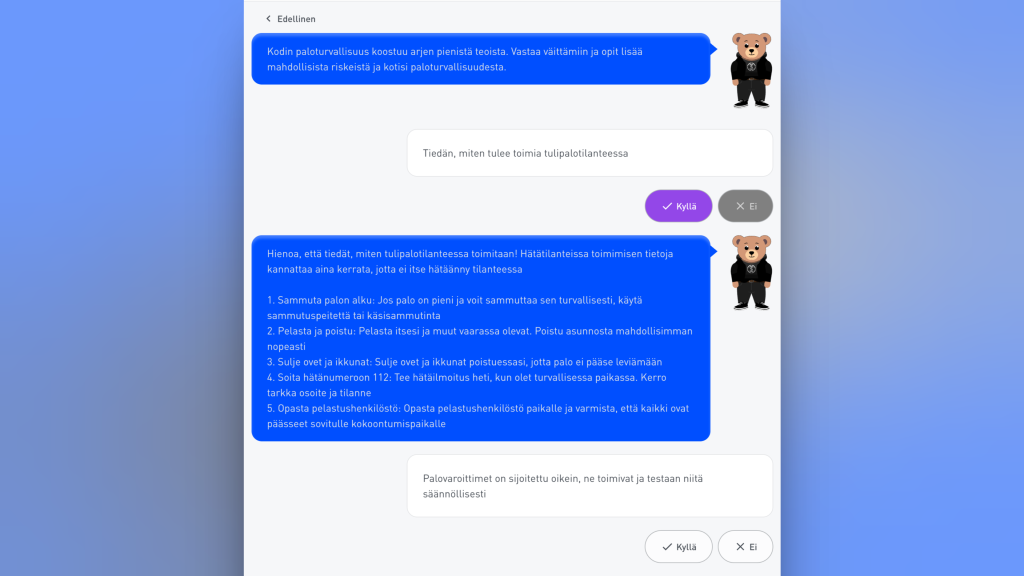
The solution is technically robust and responsible. The Teddy’s answers are concise, cited, and built with inherent caution. The underlying architecture combines modern LLM capabilities with controlled and secure information retrieval: building-specific facts are pulled directly from the safety plan, while general advice is based on reliable external sources.
AI Teddy transforms the safety plan into a truly living service that increases awareness and improves the preparedness of the entire community.
A Lightweight app for everyone
Technically, the solution is a Progressive Web App (PWA) — a website that adapts to a mobile screen to look and feel like a native app. The key advantage is accessibility: it doesn’t need to be downloaded from an app store; instead, it is accessible via a web browser without a separate login.
When a housing company purchases the service, residents can access it effortlessly through a resident portal, an email link, or a QR code on the building’s notice board.
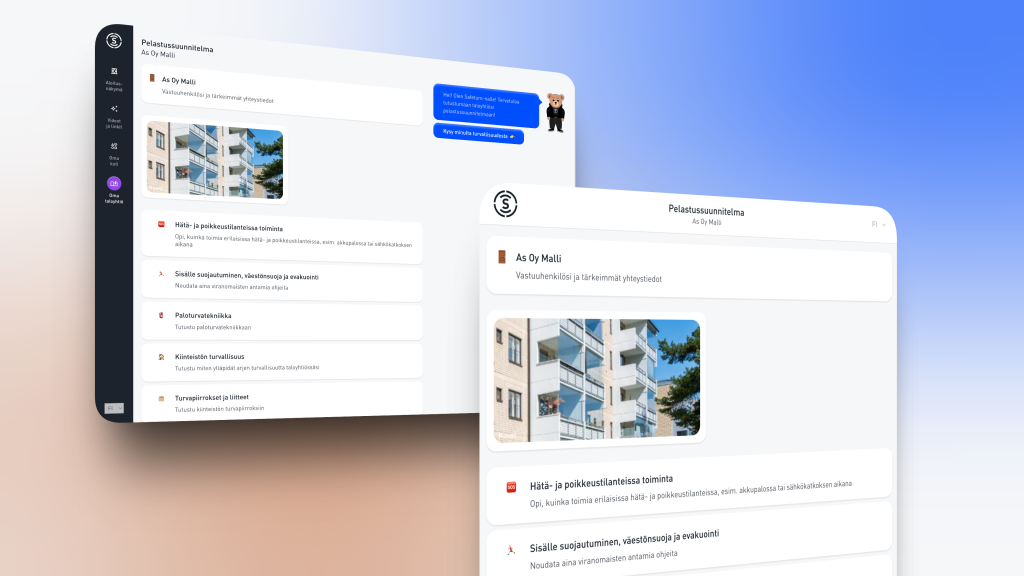
The result is an interactive safety service that also works on mobile devices
The result of the transformation is a modern digital service that breaks down the safety plan into easily digestible sections.
In addition to the AI Teddy, the service features lightweight gamified elements, such as a home risk assessment and a trivia-style fire safety quiz:
‘We wanted to introduce interactivity to the service so it wouldn’t just be a long list of text. The user remains active by providing input, reading a short segment, and then moving on to the next question,’ Martti concludes.
Key features of the service
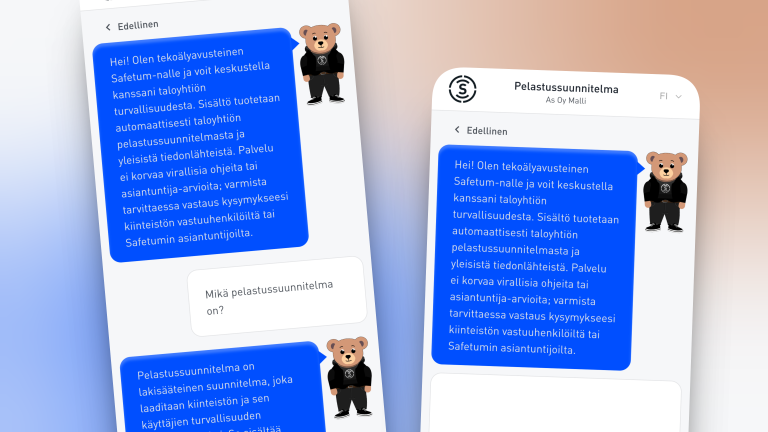
AI Teddy – AI assistant
- Brings concrete AI safety benefits to residents and lowers the threshold for exploring the safety plan.
- Functions as an easy-to-use assistant for fire safety inquiries, transforming complex safety matters into clear, actionable answers.
- Provides multilingual and accessible support to help users identify the correct procedures for various situations.
- Utilizes controlled information retrieval: building-specific facts are pulled directly from the safety plan, while general advice is sourced from reliable external authorities.
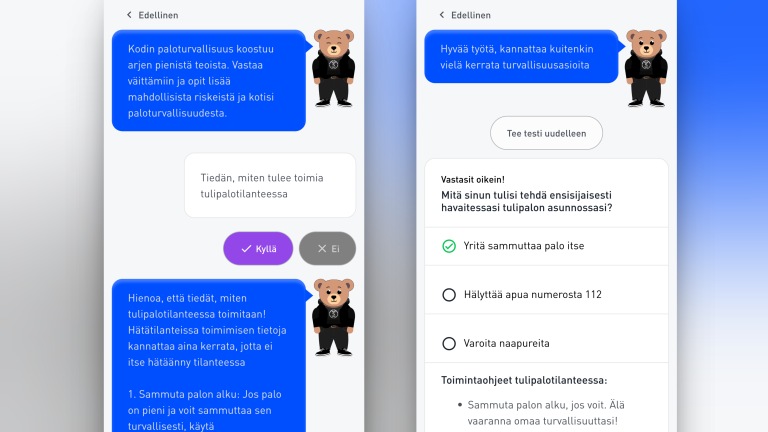
Gamified risk assessment and learning
- Interactive features, such as the home risk assessment and fire safety quiz, make emergency preparedness engaging and participatory.
- Residents receive immediate feedback and concrete instructions based on their answers, helping them absorb vital safety information effectively without having to read through heavy, dense text.
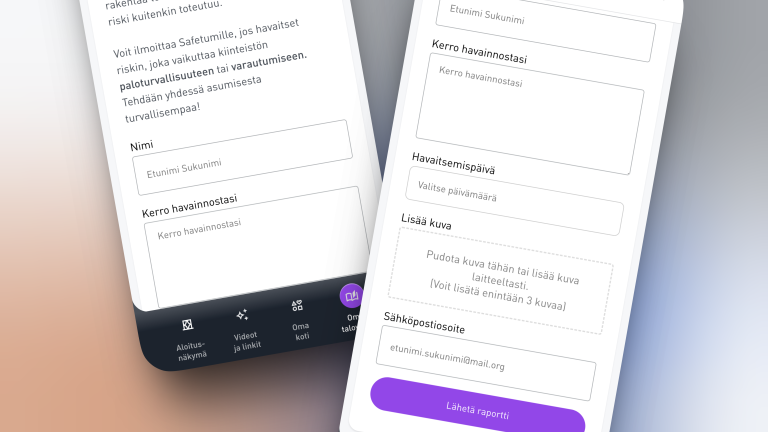
Reporting Channel
- Residents can report observed safety deficiencies (e.g., within the property) directly through the service.
- The reports are routed to Safetum’s customer service, which assesses the situation and, when necessary, forwards the information to the appropriate party, such as the property manager or maintenance services.
The service was officially launched on September 17, and the reception has been extremely positive.
“Our sales team and CEO, who have presented the service extensively, have consistently received positive feedback. The service is seen as interesting and fresh, and it clearly brings a different perspective to the safety plan,” Martti says with satisfaction.
The new Safetum Safety Plan service is an example of how ambitious service design, solid technical expertise, and the opportunities of AI can be combined to create human-centric solutions for traditional challenges. Safetum’s Safety Plan service is an innovation that not only saves time and effort but can also save lives.